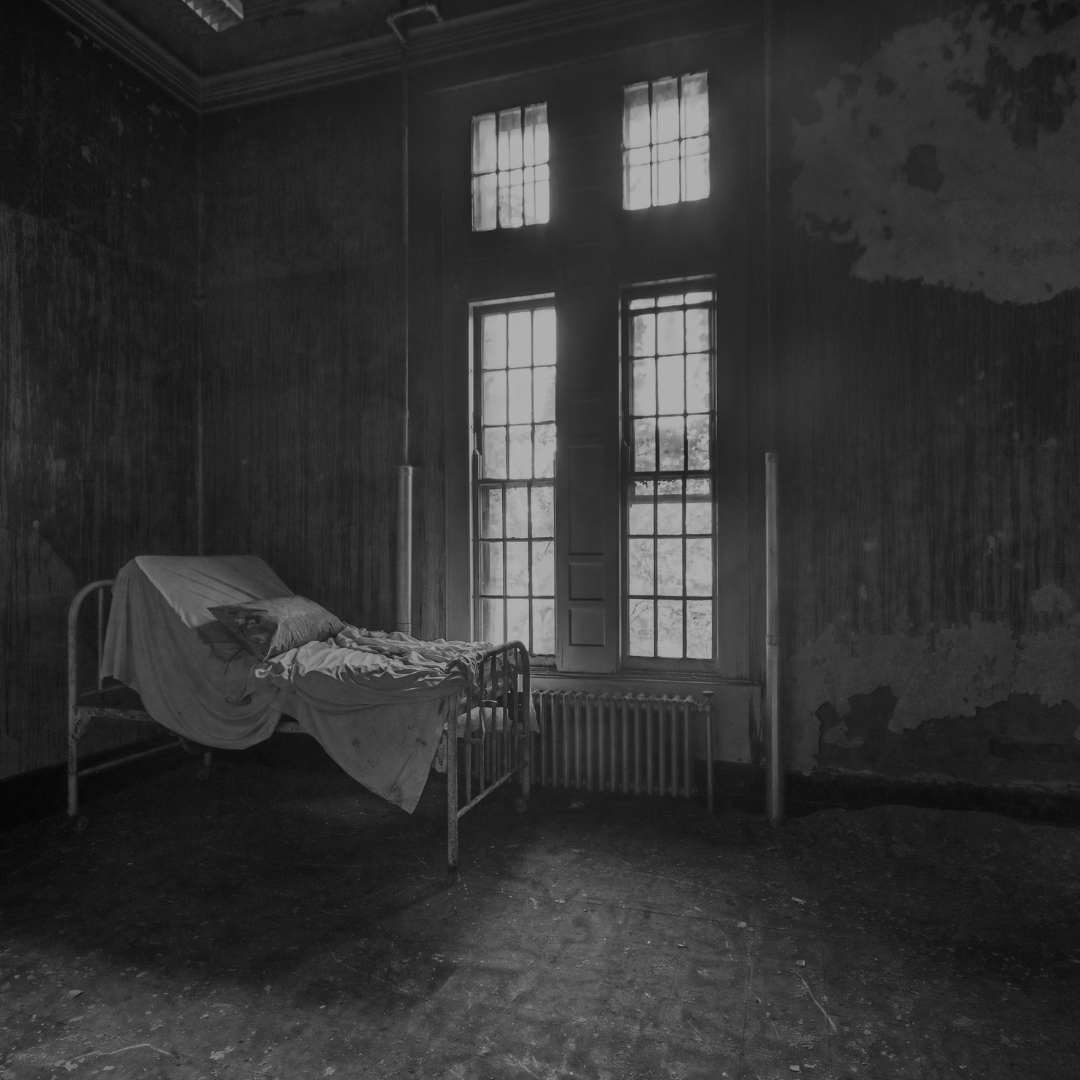
There isn’t much in life that you can’t grow accustomed to, Mary says to no one. With enough time, with enough exposure, even the experiences that once would have made you scream will instead be rendered mundane.
You’ll grow accustomed to ice-cold baths, the kind that tint your skin a little blue. You thought that was just a myth? Well, it’s true. True blue. At least the water is clean. Even as it steals your breath, even as your fingers tremble, it will wash everything away.
You might not ever find it pleasant, but you’ll grow accustomed to the walk down the hall. It’s a far cry from the warmth of a carpeted room with a roaring fireplace, but you’ll eventually acknowledge that bare feet against cold tiles are a matter of course. Even when you feel the hallway is endless, at least your nightclothes will keep the chill in the air from breaking through to your fragile skin beneath. You’ll keep your hands clenched tight in the folds of your sleeves, nails biting into your palms. It will keep them warm. It will keep them clean.
The arm gripping tightly to your bicep, as if you’re still stupid enough to try and run, you won’t just grow accustomed to. You’ll learn to welcome it. To welcome it. If nothing else, it will provide you with a certain level of warmth. Not comfort, never comfort, but warmth.
Your feet, though. Sometimes you’ll wiggle your bare toes on your cot, rubbing them against the scratchy sheets to try and get enough friction to warm them. You’ll know that they’ll remain little icicles, the sort you remember growing off the side of your house in the darkest days of January. The sort that might fall, and your brother would drop them down the back of your dress. Your toes might feel like that, and sometimes you’ll worry that you’ll never be warm again. You will always get warm again, though. Eventually. It’s just another part of your routine.
You’ll grow accustomed to meeting with Dr. Harper, whether you want to or not. You might not have liked him in the beginning, but if nothing else, you’ll always know what you can expect with him. You find a certain comfort in that. It’s not punishment, he’ll tell you. It’s treatment. As if you’re something that needs fixing. You can sit quietly while he explains the reasons you need to be here, and you can nod, and agree, and a little while later you’ll be left alone in your room. Or, you can disagree, as politely as you’ve ever spoken to your mother’s friends when she allowed you into the drawing room, and a little while later you’ll be left alone in your room, but only after you’ve been given another round white pill to take. You’ll grow accustomed to the pills—to swallowing without question, without hesitation.
Even if you’ve never been called agreeable in your life, you’ll grow very, very accustomed to being agreeable. It will become as familiar to you as the endless white of the walls in your room. As familiar as the tiny spiderweb crack in the corner of the ceiling above your head, that you always worry will drip something. Water, or maybe spiders, but you’ll try not to think about that too much. It will be as familiar as that half-dream, half-waking state, when you aren’t entirely sure what’s real. Sometimes, you’ll wish you could go back and be more agreeable. But a general sense of unreality, of disbelief, that’s probably the first thing you’ll get used to.
The sound of wailing in the evening, up and down the hall, you’ll be old hat at that. You’ll know that when the sun goes down, even the residents who are at their most placid during the day can’t help but release the pressure valve when the sun goes down. Even the quiet weeping, although at first it will be a surprise to find the hiccupping breaths originating from your own breast, it won’t surprise you for very long.
You’ll understand the isolation. To being alone so often. You’ll understand. Your children are too young to be exposed to a place like this. It would engender too many difficult questions, for which you’ll have no satisfactory answers to give them. Your mother is too ill to make such a long trip. Your husband… well, he will visit, sometimes, even if you wish he wouldn’t. If you sometimes speak aloud in your room, just to hear a voice, even if it is your own, well, you’re sure someone said once that you are your own best company.
Almost anything. You can get used to almost anything. But what you can’t ever, but never grow accustomed to, is the dirt crusted under the too-long fingernails of the man who brings your food. The nails, at the end of stubby fingers, always look yellow, and brittle. You’ll know that’s probably from the scent of tobacco that always lingers in the air long after he’s left the room. And always, always, you see a thin rind of dirt, tucked up close to the finger, taking cover. Such a small thing, you’ll think, to keep your fingernails clean. You’ll learn early on. Even if you can’t move your hands, every day, morning and evening, you can work your thumbnail under each of your fingers, and your littlest finger under your thumb, and you can eliminate any trace of the grime that accumulates during the day. You’ll learn the thin line between scraping enough to clean, and scraping so much that you bleed, undoing all your efforts. It doesn’t take much, though. A moment, maybe two. Then you’re done. So then why, why, why can’t the orderly keep his nails clean? Is that really so much for you to ask?
Perhaps, in time, you’ll grow accustomed to that as well.